
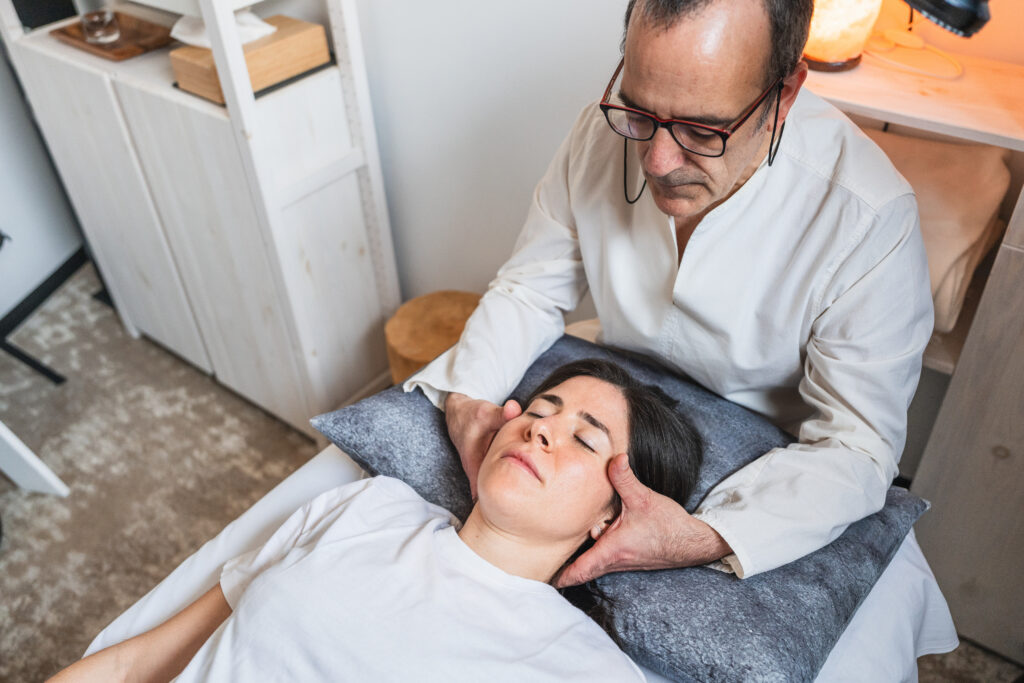
When you’re dealing with chronic pain, lingering tension, or stress that just won’t let go, finding the right craniosacral therapist can feel like a turning point. But not every practitioner offers the same level of training, experience, or care, and the quality of your provider makes a real difference in your results.
Craniosacral therapy (CST) is a gentle, hands-on practice that works with the body’s craniosacral system to release restrictions and help reset the nervous system. Because it’s such a delicate technique, you want someone who’s properly trained and genuinely experienced, not just someone who lists it among many services. If you want to find a craniosacral therapist near you, here’s how to find a professional you can truly trust.
Finding a Craniosacral Therapist You Can Trust: 6 Questions to Ask Before Committing
Before you book your first session, it’s worth doing a little homework. Asking the right questions up front helps you understand a practitioner’s background, approach, and whether they’re the right fit for your needs. Here are 6 questions to guide your search:
1. What are their license and training?
This is the most important place to start. One of the first things to look for is whether a practitioner is licensed to provide hands-on bodywork in their state, such as being a licensed massage therapist (LMT). Licensure ensures they’ve met the legal requirements to safely work with clients. Since craniosacral therapy is a modality of bodywork, it’s essential to work with someone who’s familiar with the body and has a license of touch.
From there, ask about their craniosacral therapy training. Many practitioners complete specialized education through organizations like the Upledger Institute, which offers comprehensive coursework in anatomy, physiology, pathology, evaluation techniques, and hands-on craniosacral therapy. While some practitioners choose to pursue certification, it’s not required to practice craniosacral therapy and isn’t necessarily the best measure of a therapist’s skill or experience.
Instead, ask how long they’ve been practicing CST and how much of their practice is dedicated to it. A reputable practitioner will be happy to discuss their background, answer your questions, and help you feel confident in their approach.
2. Do they specialize only in CST?
Many providers, like chiropractors, physical therapists, and massage therapists, offer craniosacral therapy as one of several services. That’s not necessarily a bad thing, but there’s a meaningful difference between someone who occasionally uses CST techniques and someone who has built their practice around it.
A therapist who focuses solely on craniosacral work tends to have a more refined touch and a stronger understanding of how to tailor each session to your body. When finding a craniosacral therapist, ask how central CST is to their practice and how often they practice it, to ensure you’re working with an expert.
3. What’s their experience?
Training matters, but so do the years and the hours. To find a craniosacral therapist you can trust, ask how long they’ve been practicing CST and what kinds of conditions they’ve helped clients with, whether that’s chronic pain, anxiety, TMJ, migraines, or trauma. If you have a specific condition you’d like to experience relief from, don’t hesitate to ask if they’ve worked with clients on a similar path. Not only does this help you narrow down your options, but it also gives you peace of mind that you’re working with someone who knows how to support your exact circumstances.
Experience also shapes how your sessions will actually feel. If you’re new to CST and unsure what happens during an appointment, it’s perfectly reasonable to ask a therapist to walk you through their process so you know what to expect before you arrive.
4. Are their sessions covered by insurance, or do they offer payment plans?
Cost is a real consideration, and it’s smart to understand it before you commit. In most cases, craniosacral therapy isn’t covered by insurance because it’s often classified as an alternative or investigational treatment. That said, some plans offer out-of-network reimbursement, and your provider may be able to provide a superbill for you to submit.
Many craniosacral therapists also accept HSA or FSA funds, making sessions more affordable when insurance doesn’t cover them. Because eligibility varies by plan, check with your HSA or FSA administrator before booking.
It’s also worth asking whether a therapist offers sliding-scale pricing, session packages, or payment plans. Many practitioners are happy to walk you through your options so you can find something that fits your budget and keeps your care consistent.
5. Do they have experience working with kids, babies, teens, or adults?
Craniosacral therapy isn’t one-size-fits-all, and working with an infant is very different from working with an adult. Depending on who the sessions are for, you’ll want to make sure your therapist has real experience with that age group.
CST for infants, in particular, requires advanced training and a gentle, specialized approach. If you’re seeking care for a child, a baby, or a teen, ask directly about their experience working with younger clients.
6. What are their reviews like?
Finally, see what other clients have to say. Reviews and testimonials give you a window into a therapist’s professionalism, demeanor, and results. Look for success stories that sound like your situation, whether that’s relief from chronic pain, reduced anxiety, or support through a difficult season.
A pattern of thoughtful, positive feedback is a strong sign you’ve found a craniosacral therapist, someone who delivers attentive, effective care.
Ready to Experience the Difference a Trusted Craniosacral Therapist Can Make?
Finding a craniosacral therapist who’s the right fit takes a little research, but the payoff is worth it: a skilled practitioner who listens, understands your needs, and helps you heal.
As a licensed massage therapist (LMT) with advanced training through the Upledger Institute, I bring over a decade of holistic experience to every session, along with specialized training in SomatoEmotional Release and craniosacral therapy for kids and infants. I work with clients of every age in Salt Lake City, West Jordan, and nearby communities experiencing a wide range of concerns, including TMJ, chronic stress, depression, and more, tailoring each session to what your body needs.
I also offer free consultations, so you can get a feel for my approach and make sure we’re the right fit before committing to anything. I accept HSA and FSA payments, giving you another flexible way to pay for craniosacral therapy when insurance doesn’t cover it. If you’re ready to say goodbye to chronic pain, tension, or stress, I’d love to help. Reach out today to book your free consultation and discover how craniosacral therapy in Utah can transform the way you feel.
